The Corporate Cheat Code
If you look up the nostalgia marketing definition in a corporate business textbook, it will tell you it is “the strategy of tapping into positive, familiar concepts from previous decades to build consumer trust and emotional connection.”
But let’s be brutally honest. What is nostalgia marketing, actually?
It’s a psychological cheat code. It is the realization by executives that true originality is expensive and risky, but your childhood memories are completely free to harvest. In an era where modern media has become little more than expensive background noise—which we covered in our teardown of second-screen viewing—brands know that the only way to get you to look up from your phone is to flash a ghost from your past across the screen.
The Psychology: Why Your Brain Does the Heavy Lifting
To understand the sheer effectiveness of nostalgia marketing, you have to understand how terrible the human brain actually is at remembering reality.
The “Free Ray Tracing” Effect
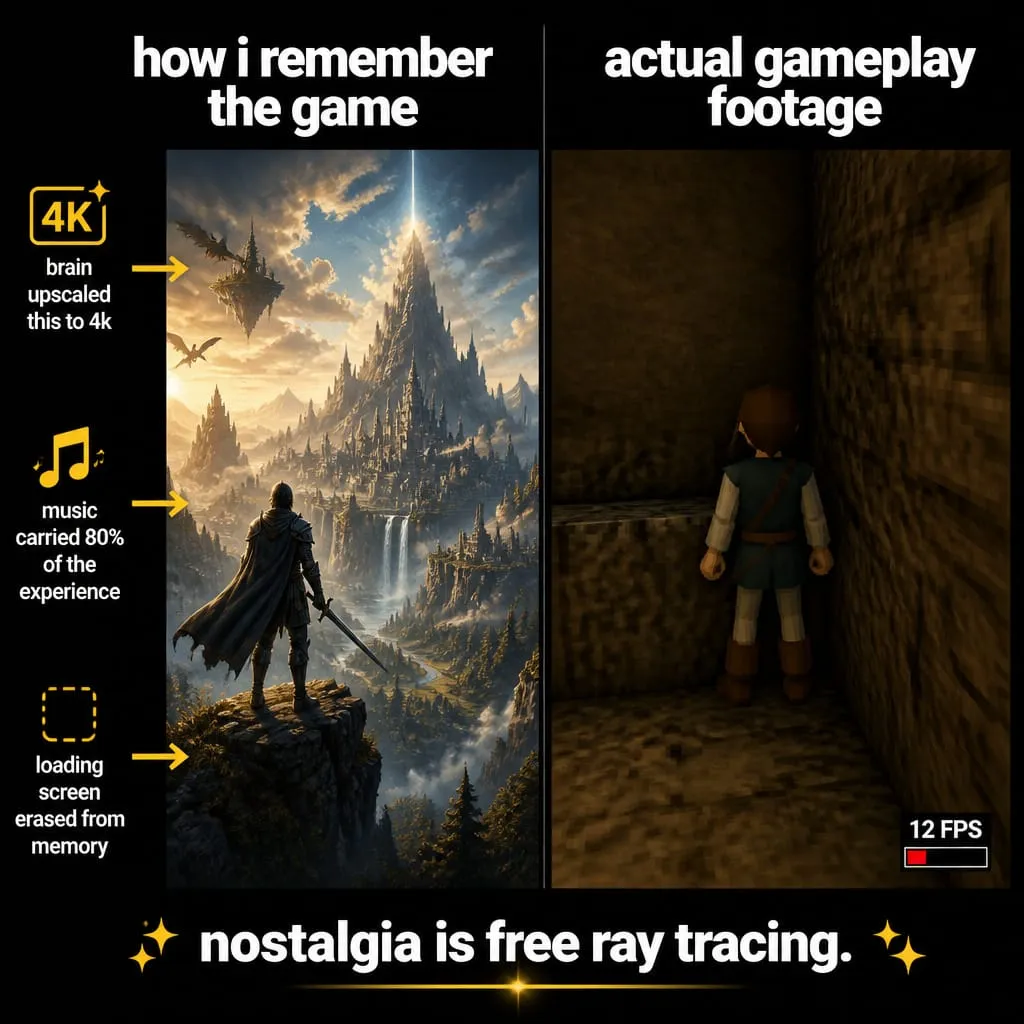
Marketers know that nostalgia is basically free ray tracing. When you think back to playing Ocarina of Time or Final Fantasy VII on a CRT TV, you remember a 4K, emotionally resonant masterpiece. Your brain automatically upscaled the epic music, magnified the scale of the world, and conveniently deleted the 12-FPS frame drops and the agonizing loading screens.
Upscaling Emotion, Deleting Flaws
When a brand sells you a retro product or a remastered game, they aren’t actually selling you the real past. They are selling you the hallucinated, perfectly rendered version your brain created. You’ve already done 90% of the marketing department’s job for them. All they have to do is drop the familiar logo in front of you, and your brain floods with unearned dopamine. It’s the same psychological loop that keeps you hooked on algorithms, just packaged in a different wrapper (if you want to see how much that costs you, calculate your doomscroll tax here).
The Infinity Gauntlet: How Brands Weaponize the Past
If you look at the brands that use nostalgia marketing the most heavily, you start to realize they are all reading from the exact same risk-averse playbook. Disney, Nintendo, Paramount, and even fast-food giants are terrified of funding new ideas.
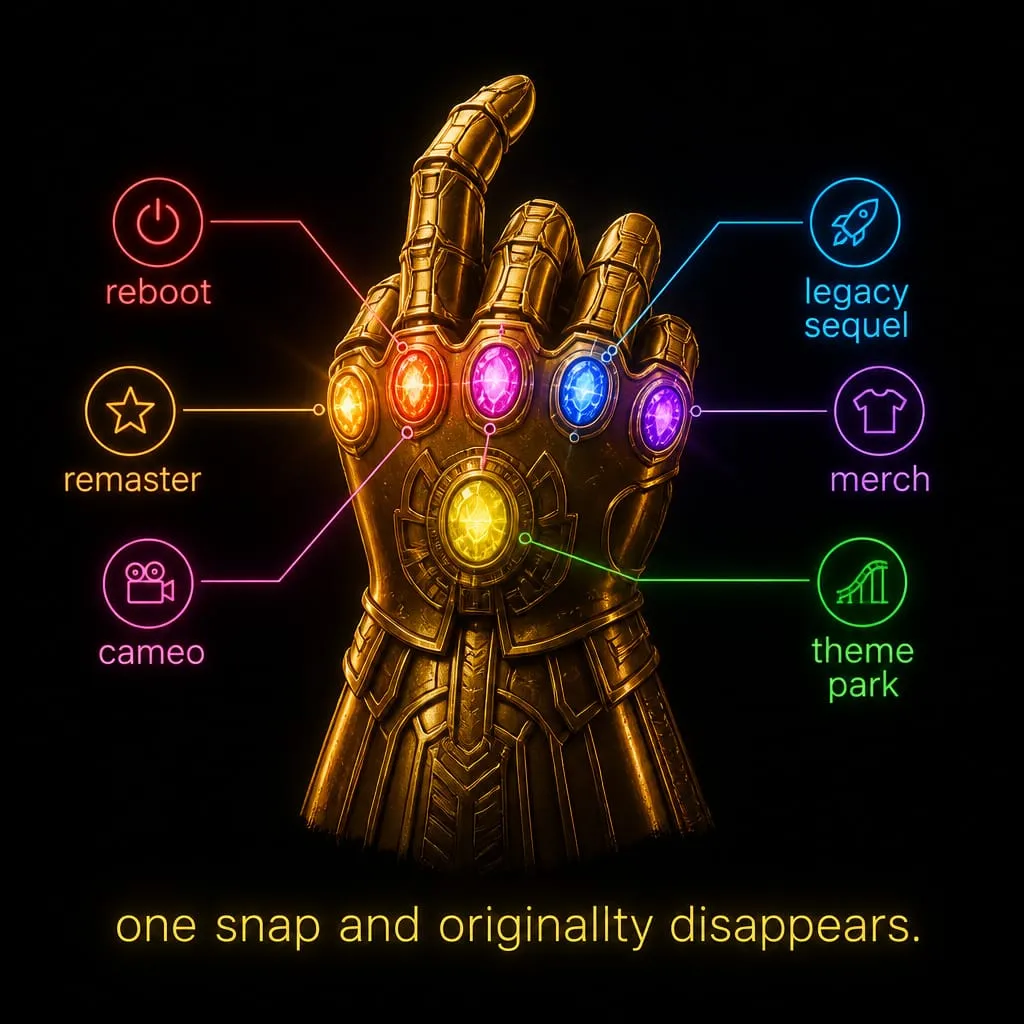
Instead, they use a corporate Infinity Gauntlet to snap originality out of existence.
The Four Pillars of Franchise Recycling
Every time a studio or corporation needs a guaranteed quarterly bump, they just activate one of the stones:
- The Legacy Sequel: Bring the 65-year-old original actor back to pass the torch.
- The Remaster: Sell you the exact same code you bought in 1998, but with slightly better lighting.
- The Reboot: Take a beloved IP, strip its soul, and wrap it in modern CGI.
- The Cameo: Stop the plot of a movie entirely so a character from 20 years ago can walk on screen for three seconds to trigger audience applause.
Fast Food’s Time Machine
Some of the most aggressive nostalgia marketing examples aren’t even in entertainment—they are in fast food. Look at McDonald’s nostalgia marketing over the last few years. The adult Happy Meals featuring the Cactus Plant Flea Market retro mascots, or bringing back the Halloween Boo Buckets for adults. They aren’t selling burgers; they are selling a fleeting, $9 simulation of what it felt like to be eight years old and free of adult responsibilities.
The Slop Era: When Marketing Becomes Bait
Nostalgia marketing used to require at least a fraction of effort. A company had to dig up the original molds, secure the legacy licensing rights, or physically rebuild a retro product. Today, that barrier to entry has completely collapsed. We have crossed the line from nostalgia marketing into pure nostalgia bait.
The Collapse of the Timeline
Thanks to generative AI, the internet is rapidly filling up with synthetic, mass-produced pasts. TikTok and Instagram are flooded with fake 80s commercials, AI-generated “vintage” aesthetics, and manufactured retro vibes that never actually existed.
Synthetic Pasts and the Dead Web
The Dead Web is leveraging our longing for the past by feeding us mathematically generated slop designed to trigger a specific melancholic aesthetic. When a brand does it, it’s a calculated financial trap. When the algorithm does it, it’s just a desperate attempt to farm engagement off your emotional vulnerabilities.
Stop trusting the retro filter. If you want to know if that nostalgic clip on your feed is actually a piece of preserved media history or just a recycled, generative hallucination, run it through the Vibeaxis Slop Analyzer.
Don’t let them bait your childhood.