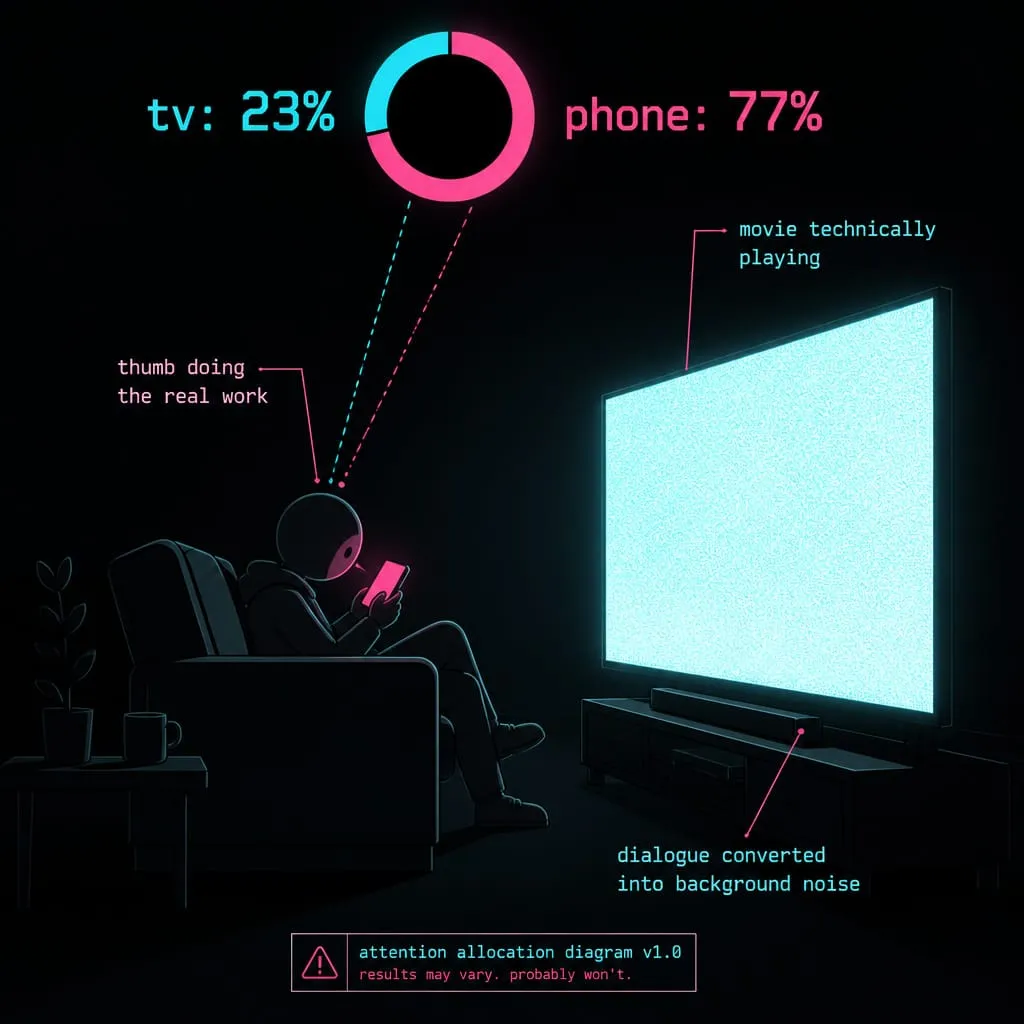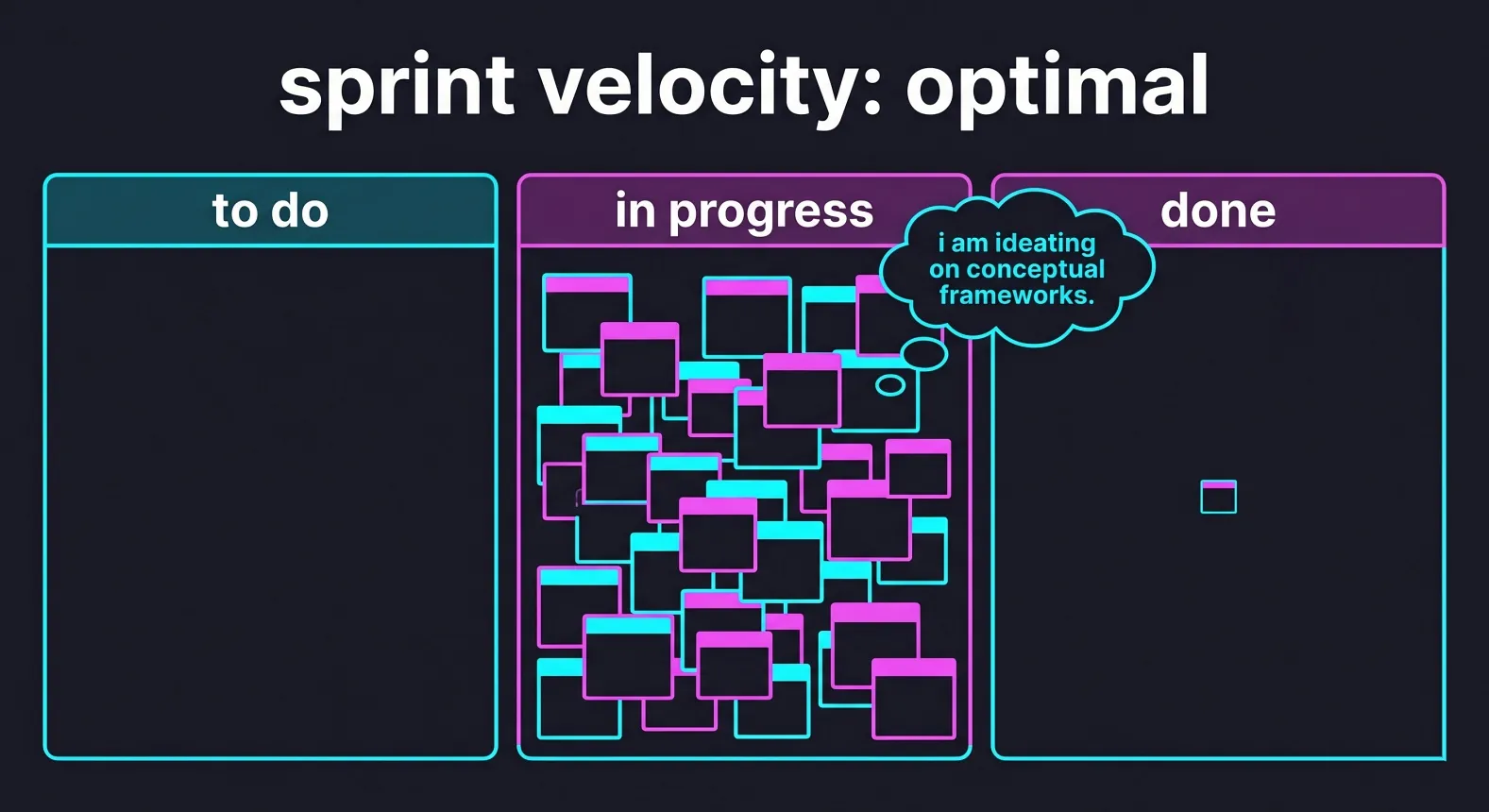
If you are reading this on your laptop, there is a 90% chance your phone is sitting unlocked next to your keyboard. If you are reading this on your phone, there is a TV playing in the background that you haven’t looked at in twenty minutes.
You aren’t alone. You are just a victim of second screen viewing.
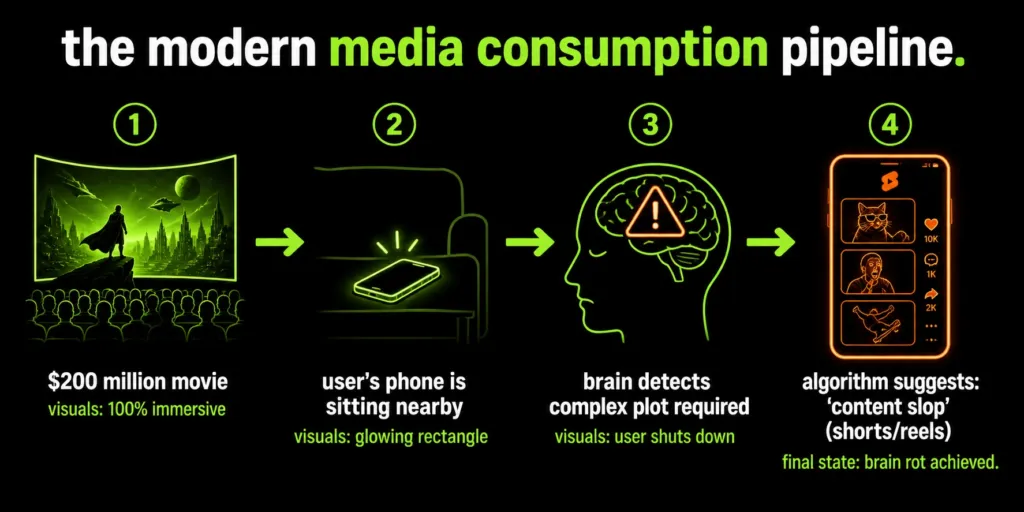
We used to consume media. Now, we just set up digital waiting rooms to sit in while we dissociate. Here is how the tech industry broke our brains, and why they have absolutely no idea how to fix it.
The History: How We Became the Subway Surfers Generation
Second screen viewing didn’t happen overnight. It started innocently enough in the early 2010s. We checked Twitter during commercial breaks. We Googled an actor’s name while watching a movie.
But then, the attention economy industrialized. Social media algorithms realized that if they couldn’t keep your attention for a full 20 minutes, they could at least hack your dopamine receptors in 15-second intervals. Soon, one screen wasn’t enough to satisfy the baseline level of stimulation required to just exist in a room.
The main screen stopped being the event. It became the background noise required to make looking at the smaller screen feel less depressing.
The Cause: The Myth of User Engagement
The primary cause of second screen viewing is actually a massive miscalculation by Silicon Valley. For a decade, delusional tech bros and streaming executives have been operating on the “myth of user engagement.” They threw hundreds of millions of dollars at “immersive experiences,” assuming we actually wanted to pay attention.
They were wrong.
When every app, game, and streaming service is aggressively fighting for 100% of your undivided focus, the human brain simply shorts out. We don’t want to engage. We want content slop. We want a $200 million Marvel movie to play softly in the background while we play a muted space game and listen to a podcast about a cult.
The Effects: A Pipeline of Premium Slop
The effects of second screen viewing are actively destroying the media landscape. We have stopped demanding quality and started demanding convenience.
The Subscription Void: We are paying $60 a month across five different streaming platforms just to avoid sitting in silence. We are subscribing to digital white noise machines.
The Streaming Crash (The Netflix True-Crime Industrial Complex): Look at the top 10 on Netflix on any given Tuesday. It’s not prestige cinema; it’s Love is Blind or a mass-produced true-crime documentary about a guy who scammed a timeshare company. Writers are now forced to write “audio-first television.” You can walk away to make a sandwich, scroll through Instagram for ten minutes, come back, and miss absolutely zero plot development because the dialogue is just endless exposition designed for people who aren’t looking at the TV.
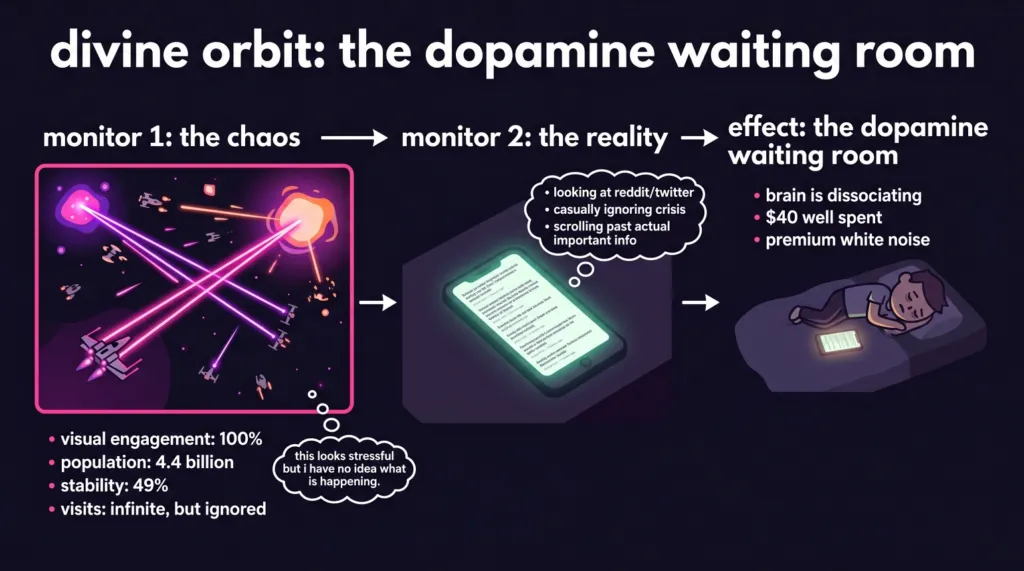
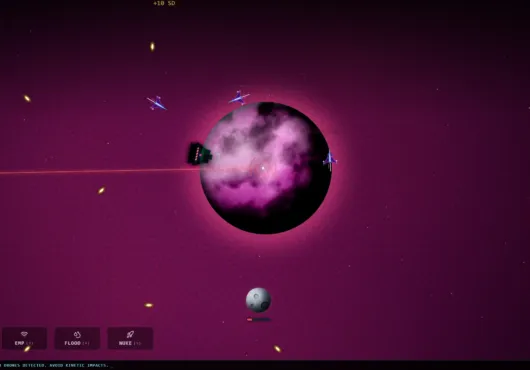
Gaming Fatigue (The Fidget Spinner Era): Why do you think games like Vampire Survivors exploded? Players are abandoning massive, 100-hour cinematic RPGs because they demand actual cognitive load. We don’t want to learn 40 different combo mechanics. I literally just played a $5 space simulator called Divine Orbit, ignored a planetary crisis, and watched my character quietly drop dead to a gas cloud while I was looking at my phone. And I didn’t even care. It gave my hands something to do while my brain was elsewhere. Modern gaming is just a premium fidget spinner.
The Subway Surfers Singularity: The tech industry realized our attention spans were so fried that we couldn’t even handle a single screen anymore. So, they started hard-coding the second screen into the first screen. You can’t watch a 60-second podcast clip on TikTok or Reels without half the screen being taken up by a muted video of Subway Surfers or someone playing with kinetic sand. It is literal visual baby food designed to pacify your optic nerve while someone talks at you.
The Prediction: What Happens Next?
If you think it stops at two screens, you haven’t met a desperate venture capitalist.
The next five years will be defined by the panicked attempt to monetize the exact moment you glance away from your primary device. We will see “Third Screen AI”—smart home devices and augmented reality glasses designed to feed you micro-ads the second your TV detects you are looking at your phone.
Media won’t get better. It will just get louder.
How to Fix It (If You Even Care To)
The standard tech-blog advice here is to “do a dopamine detox” or “put your phone in a drawer.” That is delusional.
You can’t fix second screen viewing by fighting it. You fix it by accepting it. Stop paying $20 a month for premium streaming services you don’t watch. Cancel the subscriptions. Let the tech bros hemorrhage VC money trying to build the metaverse, and just accept that you are going to stare at a wall.
Alternatively, go outside. The graphics are terrible, the NPCs are annoying, but the framerate is flawless and it only requires one screen.